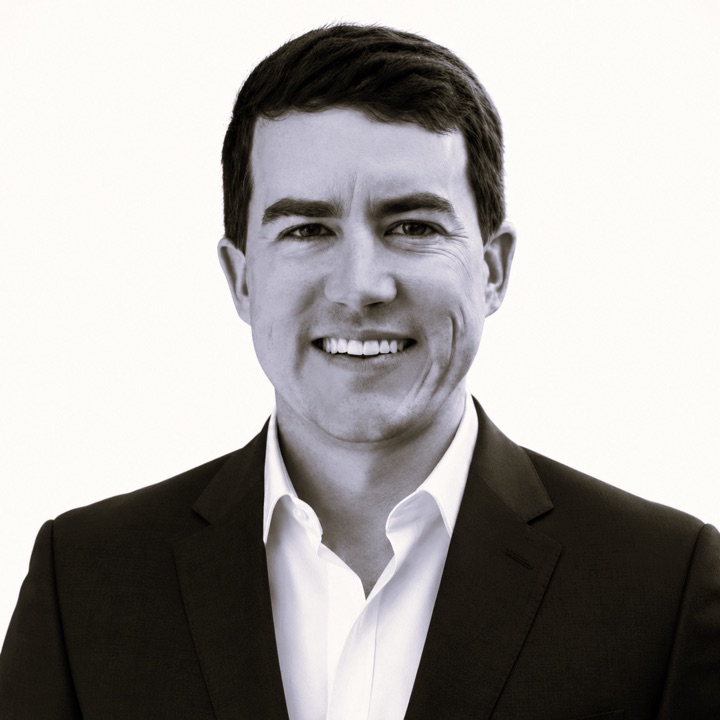
UTXO’s Daniel Hinton on Bitcoin Magazine TV: how Bitcoin liquidity has matured since 2018, custody in the age of AI, building UTXOracle, and the Bitcoin-to-gold chart.
Chapters
- 0:06What institutional mandates really mean
- 1:20How Bitcoin liquidity matured
- 3:45Custody in the age of AI
- 5:30Building UTXOracle
- 8:20Sustainable balance sheets versus leverage
- 10:19Where the opportunities are
- 12:02What institutions need from Bitcoin products
- 13:35What the market still gets wrong
- 16:42The Bitcoin-to-gold chart
Transcript
Let's welcome in the head of capital markets at UTXO, Daniel Hinton. Great to have you in with us.
Thanks for having me.
Yeah, we're going to have lots of UTXO representation on the show, so really excited for that. But let's get into it. Institutional capital's coming into Bitcoin through so many paths, ETFs, treasury companies, etc. Where are you seeing the most sophisticated capital right now? And what are those investors buying that the retail investors are missing?
Well, the thing that people on the retail side generally don't understand about institutional capital is that when people talk about an investment mandate, they really mean it's a mandate. It's not a nice-to-have or a recommendation. It's: you must only invest in these types of assets, these types of structures. So what we're seeing now is just the volatility profile of Bitcoin has been out of the mandate of a lot of people. So the things that are really taking in a lot more capital these days are structured products, yield-focused products, and ways for people to participate in maybe some of the Bitcoin upside, but not necessarily all of it. And then you also have other people who want that amplification, that sort of marginability, that excess return that Bitcoin has as well.
Now, Daniel, you spent years at sFOX dealing with liquidity between exchanges and OTC desks. As you mentioned, there's a lot of products that have been built in this space now, a lot of extra volume, a lot of new liquidity. As the markets matured, how have you seen the relationship of liquidity? And are there any opportunities that are executable at the moment?
Well, Bitcoin has always been a global asset with 24/7 permanent liquidity needs. And that was one of the really fun things back at sFOX that I was in charge of, was managing all the global relationships with exchanges, marketmakers, OTC desks, and just participants in general. And back when I started in 2018 in that business, it was relatively common to see shocking price disparities between either exchanges within a country, say, between Coinbase and Kraken, within regions or across countries. So you would see dislocations in the range of multiple percentage points. So three, four, five percentage points different between markets. And that type of thing just really doesn't happen in the market today, as the liquidity profiles have been built out, as more marketmakers, as more sophistication, in the order books and the technology of these trading platforms have developed to avoid those edge cases where, let's face it, Bitcoin plays on hard mode. It really is a 24/7 global market. And for all of those little pockets of liquidity to have perfect liquidity at all times is a very difficult thing. Even this last couple of days, we saw with BitMEX winding down some of their markets, there was a particular perp market that had an anomalous wick up to over $150,000 per Bitcoin just from a lack of liquidity. So those are the types of things that institutional participants really get scared of, rightfully so, because if you have any margin or if you have any stop loss in those types of markets, you could potentially get wiped out and lose your Bitcoin in a catastrophic way. So the good news is those things are increasingly rare. And the market has just developed broadly in that way.
So UTXO invests across the Bitcoin ecosystem in addition to buying spot Bitcoin. But when you look at the financial stack, credit, derivatives, custody, treasury management, settlement, which part of that do you think is the most underdeveloped?
Well, that answer has maybe changed a little bit in the age of AI. Custody would have definitely not been on the list prior to the last couple of months. But that being said, I think without a solid foundation for custody, everything else is kind of a moot point. So I would just really encourage everyone to review their custody setups to only work with known, trusted vendors. But on the execution side and the marginability and just the suite of products and services that are offered to participants in the market, that has really gotten tremendously better over the years. And we see a lot of the top-tier investment banks and just generally financial institutions have spot Bitcoin products.
They have marginability. They have ways for people to just participate in the way that they want to. And that's a big change from the way things used to be in the Bitcoin markets to where you would have to come to Bitcoin. You would have to go create an account somewhere. You'd have to change the way you're doing things. You'd have to do things that are new or uncomfortable to you, where now it's much more common for you to just have those services integrated into your existing service providers and brokerage platforms and custody providers to where you can stay where you are and let Bitcoin come to you, which is great.
Now, Daniel, you co-created UTXOracle to address the problem of what we're talking about with addressing how do we get a reliable Bitcoin reference price across this fragmented global market, which obviously has become more efficient. But tell us what you can about that product, about the process of building that. How does that work? What does it take to make something like that and understand that it's a true point of truth across the markets? And additionally, as more is being built, it's not just spot anymore. There's derivatives. There's structured products. How important does a true reference price infrastructure become as these products get built out?
Well, it's incredibly important. And like we talked about before, your choice of trading venue matters a lot because there is no single price of Bitcoin. There are thousands of different prices all across the world and all these different pools of liquidity, which is, again, one of the reasons why Bitcoin has to play on hard mode. There is no clearinghouse for Bitcoin outside of the Bitcoin blockchain. So with the UTXOracle project, that was kind of the impetus. We would, back in the Raleigh Bitcoin meetup group, we would just sit down and look at the Bitcoin blockchain. And there are some really cool visuals that you can kind of interpolate what's happening on chain and how things change over time. But this particular project, it's able to take individual transactions and kind of amalgamate them across about a day and come up with a very reasonable, reputable settling price for Bitcoin that shows up on chain that you can download the software for and run on your local laptop that pairs with your Bitcoin node. And you can just see what does the Bitcoin blockchain think the price of Bitcoin is today. And looking at the numbers from this morning, it shows 85,000 and change.
So it's really this amazing recursive feedback loop that we use Bitcoin and then Bitcoin can kind of sometimes reflect things back to us about the world outside of itself, which is a really fun topic. And I would just highly encourage everyone to, number one, go check out the project at utxo.live. It's free, open-source software you can download. It's also a great way to just understand how your Bitcoin node works, what's happening under the hood. And because Bitcoin, if it's anything, it's all of our combined efforts to develop it and to enjoy it and to use it in our lives and using the software is really what makes Bitcoin important.
Now, we've seen Bitcoin treasury companies very quickly evolve from simple corporate accumulation to these much more complex structures. And it's interesting to see the different strategies, all the different companies we just mentioned at the top of the segment, which way they're going. What do you think distinguishes a sustainable balance sheet from just pure leverage?
Yeah, and this is back to our prior conversation on liquidity. Rule number one in finance is don't ever be a forced seller, right? Because if you've done something that makes it to where you're not in control of your actions, you've done something wrong. And eventually the market is going to call you out on it and take that path of maximum pain that the market so often does, right? So I would say that I'm very, very constructive on the new products and services that a lot of the treasury companies have put out into the market, how they actually are being very responsible in their capital structure and capital formation activities. And this is just one of these fantastic things that we get to see play out in real time as these playbooks get developed and different products come to market that are more or less successful. And we get to judge for ourselves how we want these companies to look and the products that we like. So it's one of the most fun things about working in the Bitcoin industry is we all get to be a part of it. And where you put your dollars and your Bitcoin and your time and your effort really does matter. And you see the results materialized pretty quickly from a lot of these companies. Back 18 months ago, none of these preferred equity products existed, right? So just the pace of development in Bitcoin is something that always keeps it fun, never a dull moment. And I don't think that's going to stop anytime soon.
Now, Daniel, we've spent a lot of time talking about efficiencies and making the market more efficient, especially around the conversation of price. But inefficiencies are where the opportunities lie, and UTXO's mentioned that an element of its strategy is looking for dislocated public market assets and finding opportunities across the Bitcoin ecosystem. When you're looking at the market today as the head of capital markets at UTXO, what are you looking for, and where are those opportunities present in the market now?
Well, that's one of the nice things about running a private fund is that you can invest in private companies, public companies, spot, derivatives, structured products, anything and everything in between, which is a lot of where our focus is. Another great thing about the Bitcoin markets is they're not inherently native to any particular capital market. So we hold positions in about a dozen global markets. And each one of those have particular regulatory profiles and liquidity profiles and just local stock market comings and goings that really have an effect on the composition of our portfolio and the relative performance of those assets. So it's nice from a discretionary allocator perspective to be able to skate where we think the puck is going to go, but also just have such a wide variety of things as this Cambrian explosion of Bitcoin activity happens across the globe to where we can focus in Southeast Asian markets or North America or South America or Europe. We hold positions in all of those locations.
UTXO has talked before about how institutions aren't blocked by not liking Bitcoin. They're blocked by the mandates built for equity and credit. So what needs to be built for Bitcoin to fit into those boxes for them?
What needs to be built is structures that give them the confidence that they can, number one, not get fired and do it in a responsible way, right? The way that individuals focus on things versus institutions is institutions are a lot less focused on the return and more focused on how the return is achieved, how repeatable it is, the volatility profile of that return and how it fits into their broader portfolio and their goals, right? Because all of these allocators have particular goals, whether it's running a foundation or a family office, a certain amount of cash flow per year to support their operations. So building products to meet them where they are and not just expecting them to go buy some hardware wallets and cold store their Bitcoin is something that Bitcoiners are not really accustomed to because Bitcoin doesn't really change for anyone. But the things that surrounding Bitcoin and the ecosystem can be made to where they're more accessible to the people that are more slow moving, but they're still moving for a reason.
And when it comes to, whether it's the slow movement of information or understanding, the market can be pricing things behind, right? A lot of times narrative does follow price, but narrative is also the way the market is rationalizing and understanding what's happening with Bitcoin. You're someone with a very unique perspective, right? You understand the infrastructure side when it comes to what you were doing at sFOX to UTXOracle. And now, you're a capital manager. From that unique perspective on the markets and the infrastructure behind the markets and Bitcoin's movements, what do you think the market is still getting wrong, whether it's in the narrative or just a fundamental misunderstanding? And maybe a more interesting question, what do you think is not understood now that will be the most obvious thing looking back five years from now?
Well, one of the things that I really like to do on the more technical analysis side of things is just look at the structure of order books and look at how prices change looking at different time frames. So, for instance, when you look at a lot of the treasury companies over this year, Q1 was okay, and then Q1 and Q2 slid out and they formed this nice rounded bottom that's starting to turn back up on the upside. You contrast that with kind of a March 2020 V-shaped bottom in the economy, right? So something was happening in the economy that caused Bitcoin and essentially every asset to permanently stop going down and take a V-shape recovery back up and to the right. So those types of sentiment-based but also just mechanical ways that order books change over time and how price responds to that change in the market participants. And that's really fascinating to me. And I really like the shape of a lot of these charts right now, having a more smooth rounded bottom that's starting to turn back up because it means that it's not necessarily something happening out in the world that's causing the prices to react the way that they have been over the last few weeks. It's more endemic to the companies, the Bitcoin ecosystem, and just the start of what could potentially be a nice bull run for us. So as we go, Bitcoin obviously becomes more of a macro asset, but it still has nuances in and of itself that, honey badger doesn't care, all right?
Bitcoin is going to do its own thing. And it's not always going to follow the correlation profile. It's not always the Nasdaq. It's not always gold. It does its own thing a lot of times. And then people forget that. This is the problem is you always want to put Bitcoin in a bucket and leave it there forever. And like a bullfrog, it's going to jump out of the bucket and you're going to have to chase it a bit. So it's not only one thing to one person.
Well, you just mentioned the start of a nice bull run. So let's talk about the buzz. This recent rally, Bitcoin up 12% just in the last three days, projecting out the next three to six months. What are the key support and resistance levels you're watching?
Well, when you look at things from a fundamentally USD perspective, it can be hard sometimes to find where the true resistance levels are. And one of the areas that I like to look at is the Bitcoin-to-gold chart. Historically, that was a pretty popular mechanism in the Bitcoin space. But I think it's gotten less popular in recent years. But it's enlightening to look at it versus gold versus the dollar. So on a gold basis, Bitcoin right now is a little under 20 ounces of gold per Bitcoin.
And there's some key resistance levels at about 22 and 26 in the near term that I think would, yeah. So those correspond to the mid-90s and the low 100,000s. So those are the near term targets that I'm personally interested in, looking at the Bitcoin gold chart versus the dollar chart.
All right. Good stuff. Thanks for joining us, Daniel.
Thanks for having me.
Yeah, we'll have to get you on again. That's Daniel Hinton, head of capital markets at UTXO.
This interview reflects the views of the speaker and is for informational purposes only. It is not investment advice, and it is not an offer to sell or a solicitation of an offer to buy any security. UTXO Management and its affiliates may hold positions in the securities discussed.